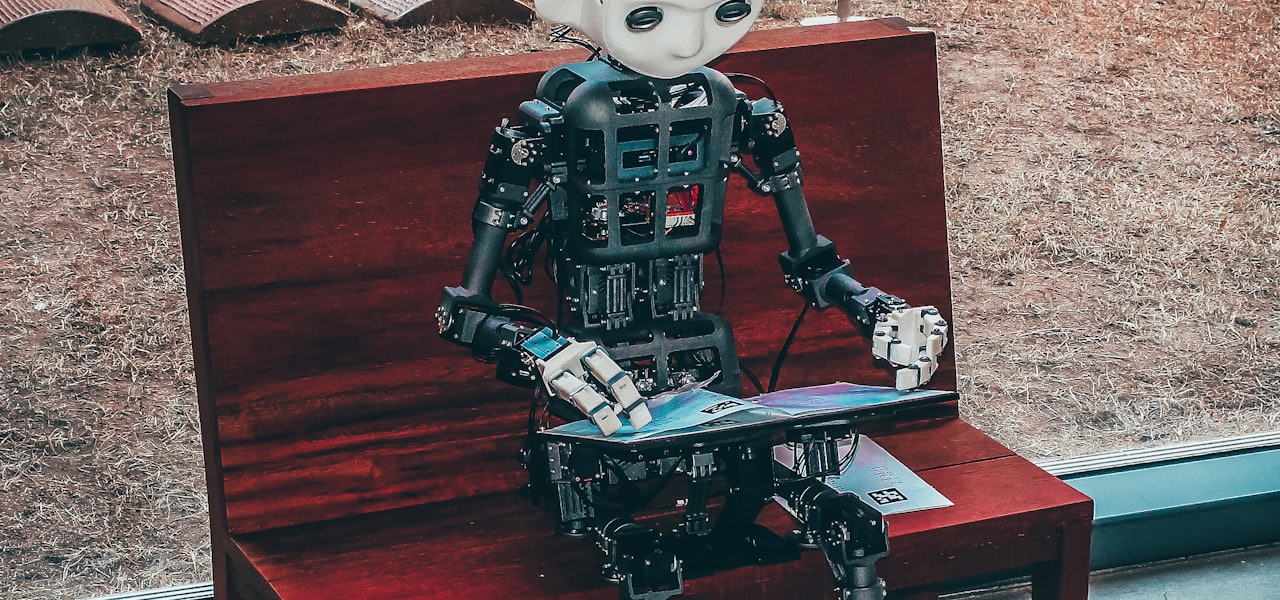
A conversational user interface (CUI) is a user interface for computers that emulates a conversation with a human. Historically, computers have relied on text-based user interfaces and graphical user interfaces (GUIs) (such as the user pressing a "back" button) to translate the user's desired action into commands the computer understands. While an effective mechanism of completing computing actions, there is a learning curve for the user associated with GUI. Instead, CUIs provide opportunity for the user to communicate with the computer in their natural language rather than in a syntax specific commands.
AltStore
AltStore is an alternative app store for the iOS and iPadOS[1] mobile operating systems, which allows users to download applications that are not available on the App Store, most commonly tweaked apps, jailbreak apps, and apps including paid apps on the app store. It was publicly announced on September 25, 2019, and launched on September 28. == History == Riley Testut is an American developer who began to work on AltStore after Apple declined to allow his Nintendo emulator Delta on the App Store. Since Xcode allowed him to temporarily install his Delta app to his iOS device for 7 days of testing, he created AltStore in 2019 to replicate this functionality, which could be extended to other .ipa files. As of 2022, AltStore had been downloaded 1.5 million times. In the following years, AltStore expanded beyond its initial sideloading functionality. The platform was founded by Testut, with Shane Gill later joining as co-founder. AltStore was initially supported through Patreon contributions from its user community, and later saw increased adoption following regulatory developments in the European Union that enabled broader third-party app distribution. The project has also been involved in notable industry collaborations, including a partnership with Epic Games. == Features == AltStore exploits a loophole in the Xcode developer platform, which allows developers to sideload their own apps which they are working on without needing to jailbreak. Sideloaded apps are signed like a developer project for testing and will expire after 7 days with a free account or one year with a paid developer account, by which they will need to be refreshed or reinstalled.
Residuated lattice
In abstract algebra, a residuated lattice is an algebraic structure that is simultaneously a lattice x ≤ y and a monoid x•y that admits operations x\z and z/y, loosely analogous to division or implication, when x•y is viewed as multiplication or conjunction, respectively. Called respectively right and left residuals, these operations coincide when the monoid is commutative. The general concept was introduced by Morgan Ward and Robert P. Dilworth in 1939. Examples, some of which existed prior to the general concept, include Boolean algebras, Heyting algebras, residuated Boolean algebras, relation algebras, and MV-algebras. Residuated semilattices omit the meet operation ∧, for example Kleene algebras and action algebras. == Definition == In mathematics, a residuated lattice is an algebraic structure L = (L, ≤, •, I) such that (i) (L, ≤) is a lattice. (ii) (L, •, I) is a monoid. (iii) For all z there exists for every x a greatest y, and for every y a greatest x, such that x•y ≤ z (the residuation properties). In (iii), the "greatest y", being a function of z and x, is denoted x\z and called the right residual of z by x. Think of it as what remains of z on the right after "dividing" z on the left by x. Dually, the "greatest x" is denoted z/y and called the left residual of z by y. An equivalent, more formal statement of (iii) that uses these operations to name these greatest values is (iii)' for all x, y, z in L, y ≤ x\z ⇔ x•y ≤ z ⇔ x ≤ z/y. As suggested by the notation, the residuals are a form of quotient. More precisely, for a given x in L, the unary operations x• and x\ are respectively the lower and upper adjoints of a Galois connection on L, and dually for the two functions •y and /y. By the same reasoning that applies to any Galois connection, we have yet another definition of the residuals, namely, x•(x\y) ≤ y ≤ x\(x•y), and (y/x)•x ≤ y ≤ (y•x)/x, together with the requirement that x•y be monotone in x and y. (When axiomatized using (iii) or (iii)' monotonicity becomes a theorem and hence not required in the axiomatization.) These give a sense in which the functions x• and x\ are pseudoinverses or adjoints of each other, and likewise for •x and /x. This last definition is purely in terms of inequalities, noting that monotonicity can be axiomatized as x • y ≤ (x∨z) • y and similarly for the other operations and their arguments. Moreover, any inequality x ≤ y can be expressed equivalently as an equation, either x∧y = x or x∨y = y. This along with the equations axiomatizing lattices and monoids then yields a purely equational definition of residuated lattices, provided the requisite operations are adjoined to the signature (L, ≤, •, I) thereby expanding it to (L, ∧, ∨, •, I, /, \). When thus organized, residuated lattices form an equational class or variety, whose homomorphisms respect the residuals as well as the lattice and monoid operations. Note that distributivity x • (y ∨ z) = (x • y) ∨ (x • z) and x•0 = 0 are consequences of these axioms and so do not need to be made part of the definition. This necessary distributivity of • over ∨ does not in general entail distributivity of ∧ over ∨, that is, a residuated lattice need not be a distributive lattice. However distributivity of ∧ over ∨ is entailed when • and ∧ are the same operation, a special case of residuated lattices called a Heyting algebra. Alternative notations for x•y include x◦y, x;y (relation algebra), and x⊗y (linear logic). Alternatives for I include e and 1'. Alternative notations for the residuals are x → y for x\y and y ← x for y/x, suggested by the similarity between residuation and implication in logic, with the multiplication of the monoid understood as a form of conjunction that need not be commutative. When the monoid is commutative the two residuals coincide. When not commutative, the intuitive meaning of the monoid as conjunction and the residuals as implications can be understood as having a temporal quality: x•y means x and then y, x → y means had x (in the past) then y (now), and y ← x means if-ever x (in the future) then y (at that time), as illustrated by the natural language example at the end of the examples. == Examples == One of the original motivations for the study of residuated lattices was the lattice of (two-sided) ideals of a ring. Given a ring R, the ideals of R, denoted Id(R), forms a complete lattice with set intersection acting as the meet operation and "ideal addition" acting as the join operation. The monoid operation • is given by "ideal multiplication", and the element R of Id(R) acts as the identity for this operation. Given two ideals A and B in Id(R), the residuals are given by A / B := { r ∈ R ∣ r B ⊆ A } {\displaystyle A/B:=\{r\in R\mid rB\subseteq A\}} B ∖ A := { r ∈ R ∣ B r ⊆ A } {\displaystyle B\setminus A:=\{r\in R\mid Br\subseteq A\}} It is worth noting that {0}/B and B\{0} are respectively the left and right annihilators of B. This residuation is related to the conductor (or transporter) in commutative algebra written as (A:B)=A/B. One difference in usage is that B need not be an ideal of R: it may just be a subset. Boolean algebras and Heyting algebras are commutative residuated lattices in which x•y = x∧y (whence the unit I is the top element 1 of the algebra) and both residuals x\y and y/x are the same operation, namely implication x → y. The second example is quite general since Heyting algebras include all finite distributive lattices, as well as all chains or total orders, for example the unit interval [0,1] in the real line, or the integers and ± ∞ {\displaystyle \pm \infty } . The structure (Z, min, max, +, 0, −, −) (the integers with subtraction for both residuals) is a commutative residuated lattice such that the unit of the monoid is not the greatest element (indeed there is no least or greatest integer), and the multiplication of the monoid is not the meet operation of the lattice. In this example the inequalities are equalities because − (subtraction) is not merely the adjoint or pseudoinverse of + but the true inverse. Any totally ordered group under addition such as the rationals or the reals can be substituted for the integers in this example. The nonnegative portion of any of these examples is an example provided min and max are interchanged and − is replaced by monus, defined (in this case) so that x-y = 0 when x ≤ y and otherwise is ordinary subtraction. A more general class of examples is given by the Boolean algebra of all binary relations on a set X, namely the power set of X2, made a residuated lattice by taking the monoid multiplication • to be composition of relations and the monoid unit to be the identity relation I on X consisting of all pairs (x,x) for x in X. Given two relations R and S on X, the right residual R\S of S by R is the binary relation such that x(R\S)y holds just when for all z in X, zRx implies zSy (notice the connection with implication). The left residual is the mirror image of this: y(S/R)x holds just when for all z in X, xRz implies ySz. This can be illustrated with the binary relations < and > on {0,1} in which 0 < 1 and 1 > 0 are the only relationships that hold. Then x(>\<)y holds just when x = 1, while x()y holds just when y = 0, showing that residuation of < by > is different depending on whether we residuate on the right or the left. This difference is a consequence of the difference between <•> and >•<, where the only relationships that hold are 0(<•>)0 (since 0<1>0) and 1(>•<)1 (since 1>0<1). Had we chosen ≤ and ≥ instead of < and >, ≥\≤ and ≤/≥ would have been the same because ≤•≥ = ≥•≤, both of which always hold between all x and y (since x≤1≥y and x≥0≤y). The Boolean algebra 2Σ of all formal languages over an alphabet (set) Σ forms a residuated lattice whose monoid multiplication is language concatenation LM and whose monoid unit I is the language {ε} consisting of just the empty string ε. The right residual M\L consists of all words w over Σ such that Mw ⊆ L. The left residual L/M is the same with wM in place of Mw. The residuated lattice of all binary relations on X is finite just when X is finite, and commutative just when X has at most one element. When X is empty the algebra is the degenerate Boolean algebra in which 0 = 1 = I. The residuated lattice of all languages on Σ is commutative just when Σ has at most one letter. It is finite just when Σ is empty, consisting of the two languages 0 (the empty language {}) and the monoid unit I = {ε} = 1. The examples forming a Boolean algebra have special properties treated in the article on residuated Boolean algebras. == Residuated semilattice == A residuated semilattice is defined almost identically for residuated lattices, omitting just the meet operation ∧. Thus it is an algebraic structure L = (L, ∨, •, 1, /, \) satisfying all the residuated lattice equations as specified above except those containing an occurrence of the symbol ∧. The option of defining x ≤ y as x∧y = x is then not available, leaving on
YouNoodle
YouNoodle, Inc. is a San Francisco-based company, with offices in Barcelona and Santiago, founded in 2010, building a platform for entrepreneurship competitions all over the world. YouNoodle matches entrepreneurs with competitions, accelerators, and startup programs, and provides a judging and voting SaaS platform to university, non-profit, government and enterprise clients organizing innovation challenges and competitions. Stanford's BASES, UC Berkeley LAUNCH, Start-Up Chile, Amazon Startup Challenge, and NASA are all running one or more competitions on YouNoodle's platform. == History and structure == YouNoodle was founded by Rebeca Hwang and Torsten Kolind in 2010. The company was spun off a project started by Bob Goodson (Quid) and Kirill Makharinsky (Enki) in 2007 with support from Peter Thiel (Founders Fund), Max Levchin (PayPal) and Charles Lho (Amicus Group), founding investor and Chairman of YouNoodle today. This project also spawned Quid (Goodson) and indirectly Ostrovok (Makharinsky). Although also named YouNoodle, this project/company was discontinued in 2010, when the three new entities started operations. The founders of the 2007-2010 entity were Goodson and Makharinsky, both former students of the University of Oxford. Goodson had studied medieval English literature before moving from Oxford to California when Levchin, the co-founder of PayPal, invited him to join a start-up there. Makharinsky's degree was in applied mathematics, and he was also encouraged to pursue opportunities in the United States by Levchin. Other significant employees included Hwang (co-founder of today's YouNoodle), a Stanford University doctoral student whose research is into social network theory. == Startup predictor == YouNoodle's now discontinued "Startup predictor", part of the 2007-2010 entity and developed by Makharinsky and Hwang, used mathematical models to predict the success of new businesses. The user fills in a questionnaire, which takes about half an hour to complete and concentrates on the business concept, finances, founders and advisers. Because the procedure was designed for new companies, questions on revenue and traffic are not included. The site then provided an estimate of what the company's value will be after three years and a score from 1 to 1000 representing its value as an investment. The service was free for the startups themselves, but YouNoodle intended to charge third parties for access to the results. The level of detail required by the questionnaire makes it difficult for people without inside knowledge of a company to provide the data for a prediction on their own. The company's founders have declined to explain the algorithm in detail, but state that it takes into account the entrepreneurs' experience, networks and mutual relations. Information provided by companies which use the site's networking features is used to improve the algorithm. As of August 2008, the algorithm was based on data from 3,000 startups. In the same month the company had four patents pending on the technology.
Digital organism
A digital organism is a self-replicating computer program that mutates and evolves. Digital organisms are used as a tool to study the dynamics of Darwinian evolution, and to test or verify specific hypotheses or mathematical models of evolution. The study of digital organisms is closely related to the area of artificial life. == History == Digital organisms can be traced back to the game Darwin, developed in 1961 at Bell Labs, in which computer programs had to compete with each other by trying to stop others from executing . A similar implementation that followed this was the game Core War. In Core War, it turned out that one of the winning strategies was to replicate as fast as possible, which deprived the opponent of all computational resources. Programs in the Core War game were also able to mutate themselves and each other by overwriting instructions in the simulated "memory" in which the game took place. This allowed competing programs to embed damaging instructions in each other that caused errors (terminating the process that read it), "enslaved processes" (making an enemy program work for you), or even change strategies mid-game and heal themselves. Steen Rasmussen at Los Alamos National Laboratory took the idea from Core War one step further in his core world system by introducing a genetic algorithm that automatically wrote programs. However, Rasmussen did not observe the evolution of complex and stable programs. It turned out that the programming language in which core world programs were written was very brittle, and more often than not mutations would completely destroy the functionality of a program. The first to solve the issue of program brittleness was Thomas S. Ray with his Tierra system, which was similar to core world. Ray made some key changes to the programming language such that mutations were much less likely to destroy a program. With these modifications, he observed for the first time computer programs that did indeed evolve in a meaningful and complex way. Later, Chris Adami, Titus Brown, and Charles Ofria started developing their Avida system, which was inspired by Tierra but again had some crucial differences. In Tierra, all programs lived in the same address space and could potentially execute or otherwise interfere with each other's code. In Avida, on the other hand, each program lives in its own address space. Because of this modification, experiments with Avida became much cleaner and easier to interpret than those with Tierra. With Avida, digital organism research has begun to be accepted as a valid contribution to evolutionary biology by a growing number of evolutionary biologists. Evolutionary biologist Richard Lenski of Michigan State University has used Avida extensively in his work. Lenski, Adami, and their colleagues have published in journals such as Nature and the Proceedings of the National Academy of Sciences (USA). In 1996, Andy Pargellis created a Tierra-like system called Amoeba that evolved self-replication from a randomly seeded initial condition. More recently REvoSim - a software package based around binary digital organisms - has allowed evolutionary simulations of large populations that can be run for geological timescales.
G'MIC
G'MIC (GREYC's Magic for Image Computing) is a free and open-source framework for image processing. It defines a script language that allows the creation of complex macros. Originally usable only through a command line interface, it is currently mostly popular as a GIMP plugin, and is also included in Krita. G'MIC is dual-licensed under CECILL-2.1 or CECILL-C. == Features == G'MIC's graphical interface is notable for its noise removal filters, which came from an earlier project called GREYCstoration by the same authors. G'MIC offers many built-in commands for image processing, including basic mathematical manipulations, look up tables, and filtering operations. More complex macros and pipelines built out of those commands are defined in its library files. == Interpreters == === Command line === G'MIC is primarily a script language callable from a shell. For example, to display an image: This command displays the image contained in the file image.jpg and allows zooming in to examine values. Several filters can be applied in succession. For example, to crop and resize an image: === Graphical interface === G'MIC comes with a Qt-based graphical interface, which may be integrated as a Gimp or Krita plugin. It contains several hundred filters written in the G'MIC language, dynamically updated through an internet feed. The interface provides a preview and setting sliders for each filter. G'MIC is one of the most popular Gimp plugins. === G'MIC Online === Most of the filters available for the graphical interface are also available online. === ZArt === ZArt is a graphical interface for real-time manipulation of webcam images. === libgmic === Libgmic is a C++ library that can be linked to third-party applications. It sees integration in Flowblade and Veejay.
Hyperion Cantos
The Hyperion Cantos is a series of science fiction novels by Dan Simmons. The title was originally used for the collection of the first pair of books in the series, Hyperion and The Fall of Hyperion, and later came to refer to the overall storyline, including Endymion, The Rise of Endymion, and a number of short stories. More narrowly, inside the fictional storyline, after the first volume, the Hyperion Cantos is an epic poem written by the character Martin Silenus covering in verse form the events of the first two books. Of the four novels, Hyperion received the Hugo and Locus Awards in 1990; The Fall of Hyperion won the Locus and British Science Fiction Association Awards in 1991; and The Rise of Endymion received the Locus Award in 1998. All four novels were also nominated for various science fiction awards. == Works == === Hyperion (1989) === First published in 1989, Hyperion has the structure of a frame story, similar to Geoffrey Chaucer's Canterbury Tales and Giovanni Boccaccio's Decameron. The story weaves the interlocking tales of a diverse group of travelers sent on a pilgrimage to the Time Tombs on Hyperion. The travelers have been sent by the Hegemony (the government of the human star systems), the All Thing, and the Church of the Final Atonement, alternately known as the Shrike Church, to make a request of the Shrike. As they progress in their journey, each of the pilgrims tells their tale. === The Fall of Hyperion (1990) === This book concludes the story begun in Hyperion. It abandons the storytelling frame structure of the first novel, and is instead presented primarily as a series of dreams by John Keats. === Endymion (1996) === The story commences 274 years after the events in the previous novel. Few main characters from the first two books are present in the later two. The main character is Raul Endymion, an ex-soldier who receives a death sentence after an unfair trial. He is rescued by Martin Silenus and asked to perform a series of rather extraordinarily difficult tasks. The main task is to rescue and protect the daughter of Brawne Lamia (one of the main characters of Hyperion), Aenea, a messiah coming from the time period just after the first books via time travel. The Catholic Church has become a dominant force in the human universe and views Aenea as a potential threat to their power. The group of Aenea, Endymion, and A. Bettik (an android) evades the Church's forces on several worlds through use of the Consul's spaceship, ending the story on Earth. === The Rise of Endymion (1997) === This final novel in the series finishes the story begun in Endymion, expanding on the themes in Endymion, as Raul and Aenea battle the Church and meet their respective destinies. === Short stories === The series also includes three short stories: "Remembering Siri" (1983, included almost verbatim in Hyperion) "The Death of the Centaur" (1990) "Orphans of the Helix" (1999) == Development == The Hyperion universe originated when Simmons was an elementary school teacher, as an extended tale he told at intervals to his young students; this is recorded in "The Death of the Centaur", and its introduction. It then inspired his short story "Remembering Siri", which eventually became the nucleus around which Hyperion and The Fall of Hyperion formed. After the quartet was published came the short story "Orphans of the Helix". "Orphans" is currently the final work in the Cantos, both chronologically and internally. The original Hyperion Cantos has been described as a novel published in two volumes, published separately at first for reasons of length. In his introduction to "Orphans of the Helix", Simmons elaborates: Some readers may know that I've written four novels set in the "Hyperion Universe"—Hyperion, The Fall of Hyperion, Endymion, and The Rise of Endymion. A perceptive subset of those readers—perhaps the majority—know that this so-called epic actually consists of two long and mutually dependent tales, the two Hyperion stories combined and the two Endymion stories combined, broken into four books because of the realities of publishing. == Influences == Much of the appeal of the series stems from its extensive use of references and allusions from a wide array of thinkers such as Teilhard de Chardin, John Muir, Norbert Wiener, and to the poetry of John Keats, the famous 19th-century English Romantic poet, Norse mythology, and the monk Ummon. A large number of technological elements are acknowledged by Simmons to be inspired by elements of Out of Control: The New Biology of Machines, Social Systems, and the Economic World. The Hyperion series has many echoes of Jack Vance, explicitly acknowledged in one of the later books. The title of the first novel, "Hyperion", is taken from one of Keats's poems, the unfinished epic Hyperion. Similarly, the title of the third novel is from Keats' poem Endymion. Quotes from actual Keats poems and the fictional Cantos of Martin Silenus are interspersed throughout the novels. Simmons goes so far as to have two artificial reincarnations of John Keats ("cybrids": artificial intelligences in human bodies) play a major role in the series. == Setting == Much of the action in the series takes place on the planet Hyperion. It is described as having one-fifth less gravity than Earth standard. Hyperion has a number of peculiar indigenous flora and fauna, notably Tesla trees, which are essentially large electricity-spewing trees. It is also a "labyrinthine" planet, which means that it is home to ancient subterranean labyrinths of unknown purpose. Most importantly, Hyperion is the location of the Time Tombs, large artifacts surrounded by "anti-entropic" fields that allow them to move backward through time. In the fictional universe of the Hyperion Cantos, the Hegemony of Man encompasses over 200 planets. Faster than light communications technology, Fatlines, are said to operate through tachyon bursts. However, in later books it is revealed that they operate through the Void Which Binds. The Farcaster network was given to humanity by the TechnoCore and again it was another use of the Void Which Binds that allowed this instantaneous travel between worlds. The Hawking Drive was developed by human scientists, allowing the faster than light travel which led to the Hegira (from the Arabic word هجرة Hijra, meaning 'migration'). The Gideon drive, a Core-provided starship drive, allows for near-instantaneous travel between any two points in human-occupied space. The drive's use kills any human on board a Gideon-propelled starship; thus, the technology is only of use with remote probes or when used in conjunction with the Pax's resurrection technology. The resurrection creche can regenerate someone carrying a cruciform from their remains. Treeships are living trees that are propelled by ergs (spider-like solid-state alien being that emits force fields) through space. === The Shrike === The region of the Tombs is also the home of the Shrike, a menacing half-mechanical, half-organic four-armed creature that features prominently in the series. It appears in all four Hyperion Cantos books and is an enigma in the initial two; its purpose is not revealed until the second book, but is still left nebulous. The Shrike appears to act both autonomously and as a servant of some unknown force or entity. In the first two Hyperion books, it exists solely in the area around the Time Tombs on the planet Hyperion. Its portrayal is changed significantly in the last two books, Endymion and The Rise of Endymion. In these novels, the Shrike appears effectively unfettered and protects the heroine Aenea against assassins of the opposing TechnoCore. Surrounded in mystery, the object of fear, hatred, and even worship by members of the Church of the Final Atonement (the Shrike Cult), the Shrike's origins are described as uncertain. It is portrayed as composed of razorwire, thorns, blades, and cutting edges, having fingers like scalpels and long, curved toe blades. It has the ability to control the flow of time, and may thus appear to travel infinitely fast. The Shrike may kill victims in a flash or it may transport them to an eternity of impalement upon an enormous artificial 'Tree of Thorns,' or 'Tree of Pain' in Hyperion's distant future. The Tree of Thorns is described as an unimaginably large, metallic tree, alive with the agonized writhing of countless human victims of all ages and races. It is also hinted in the second book that the Tree of Thorns is actually a simulation generated by a mystical interface which connects to human brains via a strong and pulsing (as if it were alive) cord. The name Shrike seems a reference to birds of the shrike family, a family of birds that impales their victims on thorns, spines, or twigs. === Worlds and Systems === In the fictional universe of the Hyperion Cantos, the Hegemony of Man encompasses over 200 planets. The following planets appear or are specifically mentioned in the Hyperion Cantos. Planets of