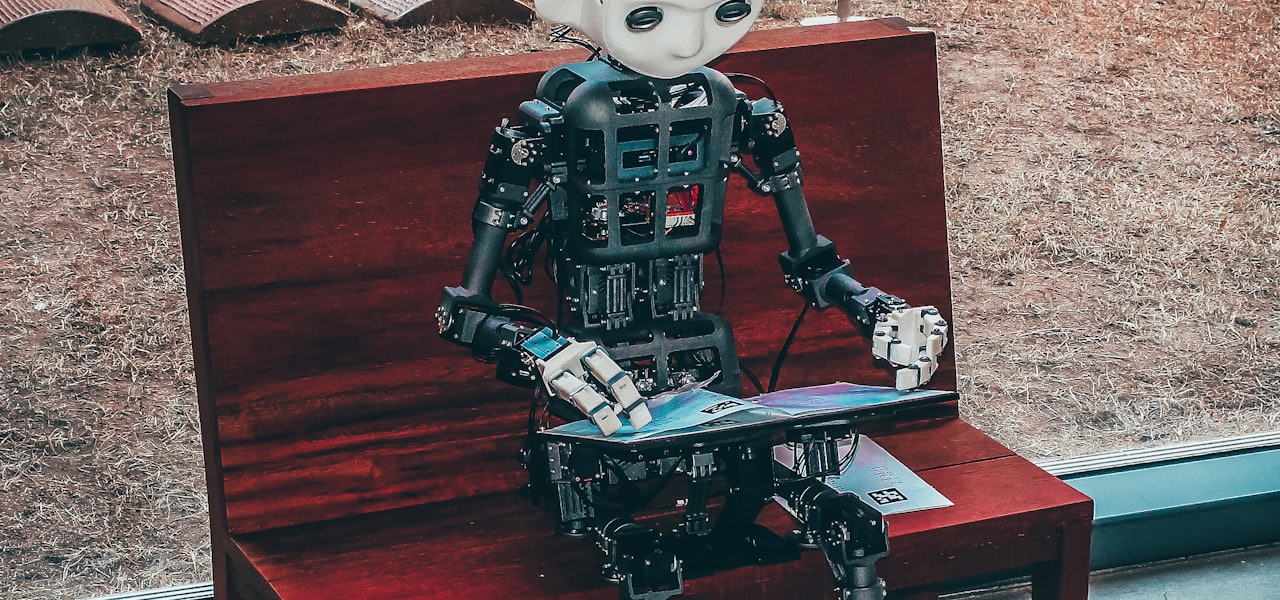
A distributed operating system is system software over a collection of independent software, networked, communicating, and physically separate computational nodes. They handle jobs which are serviced by multiple CPUs. Each individual node holds a specific software subset of the global aggregate operating system. Each subset is a composite of two distinct service provisioners. The first is a ubiquitous minimal kernel, or microkernel, that directly controls that node's hardware. Second is a higher-level collection of system management components that coordinate the node's individual and collaborative activities. These components abstract microkernel functions and support user applications. The microkernel and the management components collection work together. They support the system's goal of integrating multiple resources and processing functionality into an efficient and stable system. This seamless integration of individual nodes into a global system is referred to as transparency, or single system image; describing the illusion provided to users of the global system's appearance as a single computational entity. == Description == A distributed OS provides the essential services and functionality required of an OS but adds attributes and particular configurations to allow it to support additional requirements such as increased scale and availability. To a user, a distributed OS works in a manner similar to a single-node, monolithic operating system. That is, although it consists of multiple nodes, it appears to users and applications as a single-node. Separating minimal system-level functionality from additional user-level modular services provides a "separation of mechanism and policy". Mechanism and policy can be simply interpreted as "what something is done" versus "how something is done," respectively. This separation increases flexibility and scalability. == Overview == === The kernel === At each locale (typically a node), the kernel provides a minimally complete set of node-level utilities necessary for operating a node's underlying hardware and resources. These mechanisms include allocation, management, and disposition of a node's resources, processes, communication, and input/output management support functions. Within the kernel, the communications sub-system is of foremost importance for a distributed OS. In a distributed OS, the kernel often supports a minimal set of functions, including low-level address space management, thread management, and inter-process communication (IPC). A kernel of this design is referred to as a microkernel. Its modular nature enhances reliability and security, essential features for a distributed OS. === System management === System management components are software processes that define the node's policies. These components are the part of the OS outside the kernel. These components provide higher-level communication, process and resource management, reliability, performance and security. The components match the functions of a single-entity system, adding the transparency required in a distributed environment. The distributed nature of the OS requires additional services to support a node's responsibilities to the global system. In addition, the system management components accept the "defensive" responsibilities of reliability, availability, and persistence. These responsibilities can conflict with each other. A consistent approach, balanced perspective, and a deep understanding of the overall system can assist in identifying diminishing returns. Separation of policy and mechanism mitigates such conflicts. === Working together as an operating system === The architecture and design of a distributed operating system must realize both individual node and global system goals. Architecture and design must be approached in a manner consistent with separating policy and mechanism. In doing so, a distributed operating system attempts to provide an efficient and reliable distributed computing framework allowing for an absolute minimal user awareness of the underlying command and control efforts. The multi-level collaboration between a kernel and the system management components, and in turn between the distinct nodes in a distributed operating system is the functional challenge of the distributed operating system. This is the point in the system that must maintain a perfect harmony of purpose, and simultaneously maintain a complete disconnect of intent from implementation. This challenge is the distributed operating system's opportunity to produce the foundation and framework for a reliable, efficient, available, robust, extensible, and scalable system. However, this opportunity comes at a very high cost in complexity. === The price of complexity === In a distributed operating system, the exceptional degree of inherent complexity could easily render the entire system an anathema to any user. As such, the logical price of realizing a distributed operation system must be calculated in terms of overcoming vast amounts of complexity in many areas, and on many levels. This calculation includes the depth, breadth, and range of design investment and architectural planning required in achieving even the most modest implementation. These design and development considerations are critical and unforgiving. For instance, a deep understanding of a distributed operating system's overall architectural and design detail is required at an exceptionally early point. An exhausting array of design considerations are inherent in the development of a distributed operating system. Each of these design considerations can potentially affect many of the others to a significant degree. This leads to a massive effort in balanced approach, in terms of the individual design considerations, and many of their permutations. As an aid in this effort, most rely on documented experience and research in distributed computing power. == History == Research and experimentation efforts began in earnest in the 1970s and continued through the 1990s, with focused interest peaking in the late 1980s. A number of distributed operating systems were introduced during this period; however, very few of these implementations achieved even modest commercial success. Fundamental and pioneering implementations of primitive distributed operating system component concepts date to the early 1950s. Some of these individual steps were not focused directly on distributed computing, and at the time, many may not have realized their important impact. These pioneering efforts laid important groundwork, and inspired continued research in areas related to distributed computing. In the mid-1970s, research produced important advances in distributed computing. These breakthroughs provided a solid, stable foundation for efforts that continued through the 1990s. The accelerating proliferation of multi-processor and multi-core processor systems research led to a resurgence of the distributed OS concept. === The DYSEAC === One of the first efforts was the DYSEAC, a general-purpose synchronous computer. In one of the earliest publications of the Association for Computing Machinery, in April 1954, a researcher at the National Bureau of Standards – now the National Institute of Standards and Technology (NIST) – presented a detailed specification of the DYSEAC. The introduction focused upon the requirements of the intended applications, including flexible communications, but also mentioned other computers: Finally, the external devices could even include other full-scale computers employing the same digital language as the DYSEAC. For example, the SEAC or other computers similar to it could be harnessed to the DYSEAC and by use of coordinated programs could be made to work together in mutual cooperation on a common task… Consequently[,] the computer can be used to coordinate the diverse activities of all the external devices into an effective ensemble operation. The specification discussed the architecture of multi-computer systems, preferring peer-to-peer rather than master-slave. Each member of such an interconnected group of separate computers is free at any time to initiate and dispatch special control orders to any of its partners in the system. As a consequence, the supervisory control over the common task may initially be loosely distributed throughout the system and then temporarily concentrated in one computer, or even passed rapidly from one machine to the other as the need arises. …the various interruption facilities which have been described are based on mutual cooperation between the computer and the external devices subsidiary to it, and do not reflect merely a simple master-slave relationship. This is one of the earliest examples of a computer with distributed control. The Dept. of the Army reports certified it reliable and that it passed all acceptance tests in April 1954. It was completed and delivered on time, in May 1954. This was a "portable comput
Anomaly Detection at Multiple Scales
Anomaly Detection at Multiple Scales, or ADAMS was a $35 million DARPA project designed to identify patterns and anomalies in very large data sets. It is under DARPA's Information Innovation office and began in 2011 and ended in August 2014 The project was intended to detect and prevent insider threats such as "a soldier in good mental health becoming homicidal or suicidal", an "innocent insider becoming malicious", or "a government employee [who] abuses access privileges to share classified information". Specific cases mentioned are Nadal Malik Hasan and WikiLeaks source Chelsea Manning. Commercial applications may include finance. The intended recipients of the system output are operators in the counterintelligence agencies. A final report was published on May 11, 2015, detailing a system known as Anomaly Detection Engine for Networks, or ADEN, developed by the University of Maryland, College Park, whose goal was to "identify malicious users within a network." Using multiple datasets from Wikipedia, Slashdot, and others, researchers were able to identify vandals and malicious users on a website using both conventional algorithms and artificial intelligence. The Proactive Discovery of Insider Threats Using Graph Analysis and Learning was part of the ADAMS project. The Georgia Tech team includes noted high-performance computing researcher David Bader (computer scientist).
Sourcegraph
Sourcegraph Inc. is a company developing code search and code intelligence tools that semantically index and analyze large codebases so that they can be searched across commercial, open-source, local, and cloud-based repositories. The company has two core products: Code Search and Amp. A previous core product, Cody, retains limited legacy support for existing customers. Code Search was initially released in 2013 under the name Sourcegraph, but was rebranded to Code Search when the company unveiled Cody in 2023. As of 2021, the platform has around 800,000 developers and has indexed around 54 billion lines of code. In July 2025, new accounts for Cody were discontinued, and a new AI coding project, Amp, was released. In December 2025, Amp was spun-off to become a separate company. == History == Sourcegraph Inc. was founded by Stanford graduates Quinn Slack and Beyang Liu to drive the development of a code search and code intelligence tool, formerly called Sourcegraph. It was first released in 2013 but was rebranded to Code Search in 2023. It was partly inspired by Liu's experience using Google Code Search while he was a Google intern, It was designed to "tackle the big code problem" by enabling developers to manage large codebases that span multiple repositories, programming languages, file formats, and projects. Code Search was initially self-hosted by each customer on their own infrastructure. Early customers included Uber, Dropbox, and Lyft. In 2016, Code Search was criticized for being provided with a Fair Source License with the developers explaining that "all of Sourcegraph's source code is publicly available and hackable" and was intended to "help open sourcers strike a balance between getting paid and preserving their values". In 2018, Code Search was licensed under the Apache License 2.0, and Sourcegraph OSS has since been released under the Apache License 2.0. The commercial version, Code Search Enterprise, has been released under its own license. In 2023, Code Search was criticized for dropping the Apache license for most of its code, leaving it public but only available under its Enterprise license. In 2024, the main repository was made completely private. In 2019, Code Search was integrated into the GitLab codebase, giving GitLab users access to a browser-based developer platform. In 2021, a browser-based portal became available, allowing users to browse open-source projects and personal private code for free. In 2022, Sourcegraph Cloud, a commercial single-tenant cloud solution for organizations with more than 100 developers, was launched. Sourcegraph has raised a total of $223 million in financing to date. Its most recent $125 million Series D investment in 2021 valued the company at $2.625 billion, a 300% growth from its previous valuation in 2020. In 2023 Sourcegraph Inc. unveiled their new product Cody, and rebranded Sourcegraph to Code Search. In 2025, Sourcegraph announced the discontinuation of Cody Free, Pro, and Enterprise Starter plans, effective July 23, 2025, and launched Amp, a new AI coding agent. == Products == The company has three major products: Code Search, Amp, and Cody. === Sourcegraph Code Search === Code Search tool is used to search and summarize code. It supports over 30 programming languages and integrates with GitHub and GitLab for code hosting, Codecov for code coverage, and Jira Software for project management. Sourcegraph's Code Search uses a variant of Google's PageRank algorithm to rank results by relevance. While it was originally launched under the Apache License, on June 13, 2023, it was relicensed to the non-open-source "Sourcegraph Enterprise" license. Then, on August 22, 2024, the source code was moved to a private repository, and thus no longer source-available. === Sourcegraph Amp === Launched in 2025, Amp can generate code, generate documentation, write tests, and perform refactoring operations on projects. The tool operates on a credit-based pricing model and is available through web interfaces, command-line tools, and IDE extensions. In December 2025, Sourcegraph announced that Amp would be spun-off to become a separate company. === Sourcegraph Cody === Cody is an AI coding application for writing and maintaining code. Cody was released in December 2023 and was available for Microsoft Visual Studio Code and most JetBrains IDEs. As of July 2025, Cody Free, Pro, and Enterprise Starter plans have been discontinued, with only Cody Enterprise remaining available for existing enterprise customers.
Squirrel AI
Squirrel Ai Learning is an international educational technology company that specializes in intelligent adaptive learning and was one of the first companies in the world to offer large scale AI-powered adaptive education solutions. == Methodology == Squirrel Ai Learning uses artificial intelligence to tailor lesson plans to each individual student. The company's AI researchers have access to the world's largest student databases, which are used to train the AI algorithms. Squirrel Ai Learning works with teachers to identify the most fine-grained possible concepts ("knowledge points") for a course in order to precisely target learning gaps. For example, middle school mathematics is broken into over 10,000 points such as rational numbers, the properties of a triangle, and the Pythagorean theorem. Each point is linked to related items, forming a "knowledge graph". Each knowledge point is addressed by videos, examples and practice problems. A textbook might address 3,000 points; ALEKS, another adaptive learning platform, uses 1,000. Each student begins with a diagnostic test to identify where to begin their learning. The system continues to refine its graph as more students proceed. Learning is not student-directed. The system decides the order of topics. == History and milestones == Squirrel Ai Learning was founded by Derek Haoyang Li in 2014. In March, 2017, The Squirrel Ai Intelligent Adaptive Learning System (IALS) was launched. IALS utilizes artificial intelligence to customize lessons, practice and evaluations for each individual student. In 2018, Squirrel Ai Learning established a joint research lab of AI adaptive learning with the institute of Automation of the Chinese Academy of Sciences. By 2019, Squirrel Ai Learning had opened 2,000 learning centers in 200 cities and registered over a million students in Asia. In 2019, Squirrel Ai Learning opened a research lab in partnership with Carnegie Mellon University. As of 2019, Squirrel Ai Learning had raised over $180 million in funding and in 2018 it surpassed $1 billion in valuation. In 2020, Squirrel Ai Learning launched the $1 million AAAI Squirrel AI Award for Artificial Intelligence for the Benefit of Humanity in partnership with AAAI. The inaugural award was given to Regina Barzilay for her work developing machine learning models to address drug synthesis and early-stage breast cancer diagnosis. In 2020, Squirrel Ai Learning established strategic partnership with DingTalk, Alibaba Group. As of 2021, Squirrel Ai Learning had served over 60,000 public schools, in over 1200 cities in Asia. Squirrel Ai plans to start offering its services in the United States in 2026. The American arm is separate from the Chinese company to avoid regulatory hurdles. As of January 2026, it had set up an "independent technology platform" in the US. == Recognition == Squirrel Ai Learning has gained recognition both in Asia and internationally including: Squirrel Ai Learning was named one of the World's Top 30 AI application case in the 2018 Synced Machine Intelligence Awards. In June 2019, Squirrel Ai Learning was named as one of the 50 smartest companies in China by MIT technology review. Squirrel Ai Learning won the GITEX 2019 Best Education Technology Award. In 2020, Squirrel Ai Learning won the UNESCO AI Innovation Award. Squirrel Ai Learning was listed in the 2020 CB Insight's AI 100, CB Insights' annual ranking of the 100 most promising AI startups in the world. Squirrel Ai Learning won Edtech Review's Best AI in Education Company of the Year award 2020.
Computational law
Computational law is the branch of legal informatics concerned with the automation of legal reasoning. What distinguishes Computational Law systems from other instances of legal technology is their autonomy, i.e. the ability to answer legal questions without additional input from human legal experts. While there are many possible applications of Computational Law, the primary focus of work in the field today is compliance management, i.e. the development and deployment of computer systems capable of assessing, facilitating, or enforcing compliance with rules and regulations. Some systems of this sort already exist. TurboTax is a good example. And the potential is particularly significant now due to recent technological advances – including the prevalence of the Internet in human interaction and the proliferation of embedded computer systems (such as smart phones, self-driving cars, and robots). There are also applications that do not involve governmental laws. The regulations can just as well be the terms of contracts (e.g. delivery schedules, insurance covenants, real estate transactions, financial agreements). They can be the policies of corporations (e.g. constraints on travel, expenditure reporting, pricing rules). They can even be the rules of games (embodied in computer game playing systems). == History == Speculation about potential benefits to legal practice through applying methods from computational science and AI research to automate parts of the law date back at least to the middle 1940s. Further, AI and law and computational law do not seem easily separable, as perhaps most of AI research focusing on the law and its automation appears to utilize computational methods. The forms that speculation took are multiple and not all related in ways to readily show closeness to one another. This history will sketch them as they were, attempting to show relationships where they can be found to have existed. By 1949, a minor academic field aiming to incorporate electronic and computational methods to legal problems had been founded by American legal scholars, called jurimetrics. Though broadly said to be concerned with the application of the "methods of science" to the law, these methods were actually of a quite specifically defined scope. Jurimetrics was to be "concerned with such matters as the quantitative analysis of judicial behavior, the application of communication and information theory to legal expression, the use of mathematical logic in law, the retrieval of legal data by electronic and mechanical means, and the formulation of a calculus of legal predictability". These interests led in 1959 to the founding a journal, Modern Uses of Logic in Law, as a forum wherein articles would be published about the applications of techniques such as mathematical logic, engineering, statistics, etc. to the legal study and development. In 1966, this Journal was renamed as Jurimetrics. Today, however, the journal and meaning of jurimetrics seems to have broadened far beyond what would fit under the areas of applications of computers and computational methods to law. Today the journal not only publishes articles on such practices as found in computational law, but has broadened jurimetrical concerns to mean also things like the use of social science in law or the "policy implications [of] and legislative and administrative control of science". Independently in 1958, at the Conference for the Mechanization of Thought held at the National Physical Laboratory in Teddington, Middlesex, UK, the French jurist Lucien Mehl presented a paper both on the benefits of using computational methods for law and on the potential means to use such methods to automate law for a discussion that included AI luminaries like Marvin Minsky. Mehl believed that the law could by automated by two basic distinct, though not wholly separable, types of machine. These were the "documentary or information machine", which would provide the legal researcher quick access to relevant case precedents and legal scholarship, and the "consultation machine", which would be "capable of answering any question put to it over a vast field of law". The latter type of machine would be able to basically do much of a lawyer's job by simply giving the "exact answer to a [legal] problem put to it". By 1970, Mehl's first type of machine, one that would be able to retrieve information, had been accomplished but there seems to have been little consideration of further fruitful intersections between AI and legal research. There were, however, still hopes that computers could model the lawyer's thought processes through computational methods and then apply that capacity to solve legal problems, thus automating and improving legal services via increased efficiency as well as shedding light on the nature of legal reasoning. By the late 1970s, computer science and the affordability of computer technology had progressed enough that the retrieval of "legal data by electronic and mechanical means" had been achieved by machines fitting Mehl's first type and were in common use in American law firms. During this time, research focused on improving the goals of the early 1970s occurred, with programs like Taxman being worked on in order to both bring useful computer technology into the law as practical aids and to help specify the exact nature of legal concepts. Nonetheless, progress on the second type of machine, one that would more fully automate the law, remained relatively inert. Research into machines that could answer questions in the way that Mehl's consultation machine would picked up somewhat in the late 1970s and 1980s. A 1979 convention in Swansea, Wales marked the first international effort solely to focus upon applying artificial intelligence research to legal problems in order to "consider how computers can be used to discover and apply the legal norms embedded within the written sources of the law". Considerable progress on the development of the second type of machine was made in the following decade, with the development of a variety of expert systems. According to Thorne McCarty, "these systems all have the following characteristics: They do backward chaining inference from a specified goal; they ask questions to elicit information from the user; and they produce a suggested answer along with a trace of the supporting legal rules." According to Prakken and Sartor the representation of the British Nationality Act as a logic program, which introduced this approach, was "hugely influential for the development of computational representations of legislation, showing how logic programming enables intuitively appealing representations that can be directly deployed to generate automatic inferences". In 2021, this work received the Inaugural CodeX Prize as "one of the first and best-known works in computational law, and one of the most widely cited papers in the field." In a 1988 review of Anne Gardner's book An Artificial Intelligence Approach to Legal Reasoning (1987), the Harvard academic legal scholar and computer scientist Edwina Rissland wrote that "She plays, in part, the role of pioneer; artificial intelligence ("AI") techniques have not yet been widely applied to perform legal tasks. Therefore, Gardner, and this review, first describe and define the field, then demonstrate a working model in the domain of contract offer and acceptance." Eight years after the Swansea conference had passed, and still AI and law researchers merely trying to delineate the field could be described by their own kind as "pioneer[s]". In the 1990s and early 2000s more progress occurred. Computational research generated insights for law. The First International Conference on AI and the Law occurred in 1987, but it is in the 1990s and 2000s that the biannual conference began to build up steam and to delve more deeply into the issues involved with work intersecting computational methods, AI, and law. Classes began to be taught to undergraduates on the uses of computational methods to automating, understanding, and obeying the law. Further, by 2005, a team largely composed of Stanford computer scientists from the Stanford Logic group had devoted themselves to studying the uses of computational techniques to the law. Computational methods in fact advanced enough that members of the legal profession began in the 2000s to both analyze, predict and worry about the potential future of computational law and a new academic field of computational legal studies seems to be now well established. As insight into what such scholars see in the law's future due in part to computational law, here is quote from a recent conference about the "New Normal" for the legal profession: "Over the last 5 years, in the fallout of the Great Recession, the legal profession has entered the era of the New Normal. Notably, a series of forces related to technological change, globalization, and the pressure to do more with less (in both corpo
ChatGPT
ChatGPT is a generative artificial intelligence chatbot developed by OpenAI. Originally released in November 2022, the product uses large language models—specifically generative pre-trained transformers (GPTs)—to generate text, speech, and images in response to user prompts. ChatGPT accelerated the AI boom, an ongoing period marked by rapid investment and public attention toward the field of artificial intelligence (AI). OpenAI operates the service on a freemium model. Users can interact with ChatGPT through text, audio, and image prompts. ChatGPT was quickly adopted, reaching 100 million monthly active users two months after its release and 900 million weekly active users in February 2026. It has been lauded for its potential to transform numerous professional fields, and has instigated public debate about the nature of creativity and the future of knowledge work. The chatbot has also been criticized for its limitations and potential for unethical use. It can generate plausible-sounding but incorrect or nonsensical answers, known as hallucinations. Biases in its training data have been reflected in its responses. The chatbot can facilitate academic dishonesty, generate misinformation, and create malicious code. The ethics of its development, particularly the use of copyrighted content as training data, have also drawn controversy. == Features == ChatGPT is a chatbot and AI assistant built on large language model (LLM) technology. It is designed to generate human-like text and can carry out a wide variety of tasks. These include, among many others, writing and debugging computer programs, composing music, scripts, fairy tales, and essays, answering questions (sometimes at a level exceeding that of an average human test-taker), and generating business concepts. ChatGPT is frequently used for translation and summarization tasks, and can simulate interactive environments such as a Linux terminal, a multi-user chat room, or simple text-based games such as tic-tac-toe. Users interact with ChatGPT through conversations which consist of text, audio, and image inputs and outputs. The user's inputs to these conversations are referred to as prompts. An optional "Memory" feature allows users to tell ChatGPT to memorize specific information. Another option allows ChatGPT to recall old conversations. GPT-based moderation classifiers are used to reduce the risk of harmful outputs being presented to users. In March 2023, OpenAI added support for plugins for ChatGPT. This includes both plugins made by OpenAI, such as web browsing and code interpretation, and external plugins from developers such as Expedia, OpenTable, and Zapier. From October to December 2024, ChatGPT Search was deployed. It allows ChatGPT to search the web in an attempt to make more accurate and up-to-date responses. It increased OpenAI's direct competition with major search engines. OpenAI allows businesses to tailor how their content appears in the ChatGPT Search results and influence what sources are used. In December 2024, OpenAI launched a new feature allowing users to call ChatGPT with a telephone for up to 15 minutes per month for free. In September 2025, OpenAI added a feature called Pulse, which generates a daily analysis of a user's chats and connected apps such as Gmail and Google Calendar. In October 2025, OpenAI launched ChatGPT Atlas, a browser integrating the ChatGPT assistant directly into web navigation, to compete with existing browsers such as Google Chrome. It has an additional feature called "agentic mode" that allows it to take online actions for the user. === Paid tier === ChatGPT was initially free to the public and remains free in a limited capacity. In February 2023, OpenAI launched a premium service, ChatGPT Plus, that costs US$20 per month. What was offered on the paid plan versus the free tier changed as OpenAI has continued to update ChatGPT, and a Pro tier at $200/mo was introduced in December 2024. The Pro launch coincided with the release of the o1 model. In August 2025, ChatGPT Go was offered in India for ₹399 per month. The plan has higher limits than the free version. === Mobile apps === In May-July 2023, OpenAI began offering ChatGPT iOS and Android apps. ChatGPT can also power Android's assistant. An app for Windows launched on the Microsoft Store on October 15, 2024. === Languages === OpenAI met Icelandic President Guðni Th. Jóhannesson in 2022. In 2023, OpenAI worked with a team of 40 Icelandic volunteers to fine-tune ChatGPT's Icelandic conversation skills as a part of Iceland's attempts to preserve the Icelandic language. ChatGPT (based on GPT-4) was better able to translate Japanese to English when compared to Bing, Bard, and DeepL Translator in 2023. In December 2023, the Albanian government decided to use ChatGPT for the rapid translation of European Union documents and the analysis of required changes needed for Albania's accession to the EU. Several studies have shown that ChatGPT can outperform Google Translate in some mainstream translation tasks. However, as of 2024, no machine translation services match human expert performance. In August 2024, a representative of the Asia Pacific wing of OpenAI made a visit to Taiwan, during which a demonstration of ChatGPT's Chinese abilities was made. ChatGPT's Mandarin Chinese abilities were lauded, but the ability of the AI to produce content in Mandarin Chinese in a Taiwanese accent was found to be "less than ideal" due to differences between mainland Mandarin Chinese and Taiwanese Mandarin. === GPT Store === In November 2023, OpenAI released GPT Builder, a tool allowing users to customize ChatGPT's behavior for a specific use case. The customized systems are referred to as GPTs. In January 2024, OpenAI launched the GPT Store, a marketplace for GPTs. At launch, OpenAI included more than 3 million GPTs created by GPT Builder users in the GPT Store. === ChatGPT Apps === In September 2025, OpenAI added support for Model Context Protocol (MCP) to ChatGPT apps. When enabled in developer mode, this allows for improved third-party access to ChatGPT tools and servers. === Deep Research === In February 2025, OpenAI released Deep Research, a feature that generates reports based on extensive web searches. It was initially based on the reasoning model o3 and took 5 to 30 minutes per report. === Images === In October 2023, OpenAI's image generation model DALL-E 3 was integrated into ChatGPT. The integration used ChatGPT to write prompts for DALL-E guided by conversations with users. In March 2025, OpenAI updated ChatGPT to generate images using GPT Image instead of DALL-E. One of the most significant improvements was in the generation of text within images, which is especially useful for branded content. However, this ability is noticeably worse in non-Latin alphabets. The model can also generate new images based on existing ones provided in the prompt. These images are generated with C2PA metadata, which can be used to verify that they are AI-generated. OpenAI has emplaced additional safeguards to prevent what the company deems to be harmful image generation. === Agents === In 2025, OpenAI added several features to make ChatGPT more agentic (capable of autonomously performing longer tasks). In January, Operator was released. It was capable of autonomously performing tasks through web browser interactions, including filling forms, placing online orders, scheduling appointments, and other browser-based tasks. It was controlling a software environment inside a virtual machine with limited internet connectivity and with safety restrictions. It struggled with complex user interfaces. In May 2025, OpenAI introduced an agent for coding named Codex. It is capable of writing software, answering codebase questions, running tests, and proposing pull requests. It is based on a fine-tuned version of OpenAI o3. It has two versions, one running in a virtual machine in the cloud, and one where the agent runs in the cloud, but performs actions on a local machine connected via API. In July 2025, OpenAI released ChatGPT agent, an AI agent that can perform multi-step tasks. Like Operator, it controls a virtual computer. It also inherits from Deep Research's ability to gather and summarize significant volumes of information. The user can interrupt tasks or provide additional instructions as needed. In September 2025, OpenAI partnered with Stripe, Inc. to release Agentic Commerce Protocol, enabling purchases through ChatGPT. At launch, the feature was limited to purchases on Etsy from US users with a payment method linked to their OpenAI account. OpenAI takes an undisclosed cut from the merchant's payment. === ChatGPT Health === On January 7, 2026, OpenAI introduced a feature called "ChatGPT Health", whereby ChatGPT can discuss the user's health in a way that is separate from other chats. The feature is not available for users in the United Kingdom, Switzerland, or the European Economic Area, and is available on a waitli
Random-fuzzy variable
In measurements, the measurement obtained can suffer from two types of uncertainties. The first is the random uncertainty which is due to the noise in the process and the measurement. The second contribution is due to the systematic uncertainty which may be present in the measuring instrument. Systematic errors, if detected, can be easily compensated as they are usually constant throughout the measurement process as long as the measuring instrument and the measurement process are not changed. But it can not be accurately known while using the instrument if there is a systematic error and if there is, how much? Hence, systematic uncertainty could be considered as a contribution of a fuzzy nature. This systematic error can be approximately modeled based on our past data about the measuring instrument and the process. Statistical methods can be used to calculate the total uncertainty from both systematic and random contributions in a measurement. However, the computational complexity is very high, and hence not desirable. L.A.Zadeh introduced the concepts of fuzzy variables and fuzzy sets. Fuzzy variables are based on the theory of possibility and hence are possibility distributions. This makes them suitable to handle any type of uncertainty, i.e., both systematic and random contributions to the total uncertainty. Random-fuzzy variable (RFV) is a type 2 fuzzy variable, defined using the mathematical possibility theory, used to represent the entire information associated to a measurement result. It has an internal possibility distribution and an external possibility distribution called membership functions. The internal distribution is the uncertainty contributions due to the systematic uncertainty and the bounds of the RFV are because of the random contributions. The external distribution gives the uncertainty bounds from all contributions. == Definition == A random-fuzzy Variable (RFV) is defined as a type 2 fuzzy variable which satisfies the following conditions: Both the internal and the external functions of the RFV can be identified. Both the internal and the external functions are modeled as possibility distributions (PD). Both the internal and external functions have a unitary value for possibility to the same interval of values. An RFV can be seen in the figure. The external membership function is the distribution in blue and the internal membership function is the distribution in red. Both the membership functions are possibility distributions. Both the internal and external membership functions have a unitary value of possibility only in the rectangular part of the RFV. Therefore, all three conditions have been satisfied. If there are only systematic errors in the measurement, then the RFV simply becomes a fuzzy variable which consists of just the internal membership function. Similarly, if there is no systematic error, then the RFV becomes a fuzzy variable with just the random contributions and therefore, is just the possibility distribution of the random contributions. == Construction == A random-fuzzy variable can be constructed using an internal possibility distribution (rinternal) and a random possibility distribution (rrandom). === The random distribution (rrandom) === rrandom is the possibility distribution of the random contributions to the uncertainty. Any measurement instrument or process suffers from random error contributions due to intrinsic noise or other effects. This is completely random in nature and is a normal probability distribution when several random contributions are combined according to the central limit theorem. However, there can also be random contributions from other probability distributions, such as a uniform distribution, gamma distribution and so on. The probability distribution can be modeled from the measurement data. Then, the probability distribution can be used to model an equivalent possibility distribution using the maximally specific probability-possibility transformation. Some common probability distributions and the corresponding possibility distributions can be seen in the figures. === The internal distribution (rinternal) === rinternal is the internal distribution in the RFV which is the possibility distribution of the systematic contribution to the total uncertainty. This distribution can be built based on the information that is available about the measuring instrument and the process. The largest possible distribution is the uniform or rectangular possibility distribution. This means that every value in the specified interval is equally possible. This actually represents the state of total ignorance according to the theory of evidence which means it represents a scenario in which there is maximum lack of information. This distribution is used for the systematic error when we have absolutely no idea about the systematic error except that it belongs to a particular interval of values. This is quite common in measurements. However, in certain cases, it may be known that certain values have a higher or lower degrees of belief than certain other values. In this case, depending on the degrees of belief for the values, an appropriate possibility distribution could be constructed. === The construction of the external distribution (rexternal) and the RFV === After modeling the random and internal possibility distribution, the external membership function, rexternal, of the RFV can be constructed by using the following equation: where x ∗ {\displaystyle x^{}} is the mode of r random {\displaystyle r_{\textit {random}}} , which is the peak in the membership function of r r a n d o m {\displaystyle r_{random}} and Tmin is the minimum triangular norm. RFV can also be built from the internal and random distributions by considering the α-cuts of the two possibility distributions (PDs). An α-cut of a fuzzy variable F can be defined as Therefore, essentially an α-cut is the set of values for which the value of the membership function μ F ( a ) {\displaystyle \mu _{\rm {F}}(a)} of the fuzzy variable is greater than α. This gives the upper and lower bounds of the fuzzy variable F for each α-cut. The α-cut of an RFV, however, has 4 specific bounds and is given by R F V α = [ X a α , X b α , X c α , X d α ] {\displaystyle RFV^{\alpha }=[X_{a}^{\alpha },X_{b}^{\alpha },X_{c}^{\alpha },X_{d}^{\alpha }]} . X a α {\displaystyle X_{a}^{\alpha }} and X d α {\displaystyle X_{d}^{\alpha }} are the lower and upper bounds respectively of the external membership function (rexternal) which is a fuzzy variable on its own. X b α {\displaystyle X_{b}^{\alpha }} and X c α {\displaystyle X_{c}^{\alpha }} are the lower and upper bounds respectively of the internal membership function (rinternal) which is a fuzzy variable on its own. To build the RFV, let us consider the α-cuts of the two PDs i.e., rrandom and rinternal for the same value of α. This gives the lower and upper bounds for the two α-cuts. Let them be [ X L R α , X U R α ] {\displaystyle [X_{LR}^{\alpha },X_{UR}^{\alpha }]} and [ X L I α , X U I α ] {\displaystyle [X_{LI}^{\alpha },X_{UI}^{\alpha }]} for the random and internal distributions respectively. [ X L R α , X U R α ] {\displaystyle [X_{LR}^{\alpha },X_{UR}^{\alpha }]} can be again divided into two sub-intervals [ X L R α , x ∗ ] {\displaystyle [X_{LR}^{\alpha },x^{}]} and [ x ∗ , X U R α ] {\displaystyle [x^{},X_{UR}^{\alpha }]} where x ∗ {\displaystyle x^{}} is the mode of the fuzzy variable. Then, the α-cut for the RFV for the same value of α, R F V α = [ X a α , X b α , X c α , X d α ] {\displaystyle RFV^{\alpha }=[X_{a}^{\alpha },X_{b}^{\alpha },X_{c}^{\alpha },X_{d}^{\alpha }]} can be defined by Using the above equations, the α-cuts are calculated for every value of α which gives us the final plot of the RFV. A random-fuzzy variable is capable of giving a complete picture of the random and systematic contributions to the total uncertainty from the α-cuts for any confidence level as the confidence level is nothing but 1-α. An example for the construction of the corresponding external membership function (rexternal) and the RFV from a random PD and an internal PD can be seen in the following figure.